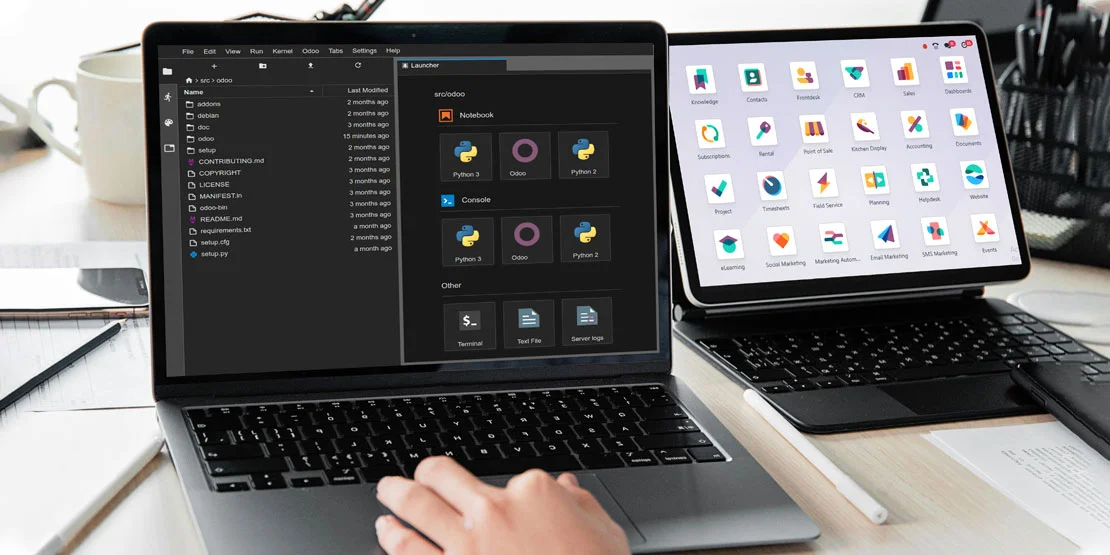
What an Odoo Development Partner Does
An Odoo development partner builds, customizes and maintains your Odoo system so it fits the way your business works. Looking for the service itself? See our Odoo Development Services or Hire Odoo Developers.
A development partner typically handles:
Custom modules
Building new features and workflows that standard Odoo does not cover, across modules such as sales, accounting, inventory, HR and manufacturing.
Integrations
Connecting Odoo with payment gateways, e-commerce platforms, shipping tools and other third-party systems, and planning the data structure so nothing is lost or exposed.
Upgrades
Moving your system to a newer Odoo version and making sure your custom code keeps working after the move.
Technical Skills to Check
Ask the partner which of these skills their developers use every day, and ask for examples from past projects:
Python
Odoo's business logic is written in Python, so strong Python skills are the base requirement.
Odoo ORM
Developers should know how to work with models, fields, records and access rules the Odoo way, not with workarounds.
XML views
Forms, lists, menus and reports in Odoo are defined in XML.
JavaScript / OWL
Needed for custom interface behavior in the Odoo web client.
PostgreSQL
Odoo stores its data in PostgreSQL, so database design, queries and performance tuning matter for larger systems.
Partner Level and Certified Developers
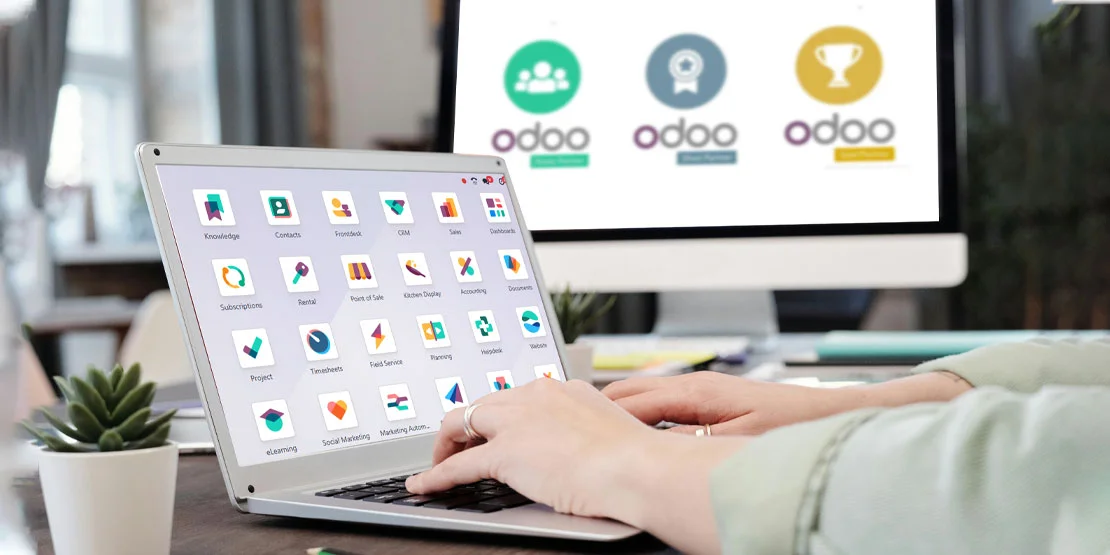
Odoo partners are ranked as Ready, Silver or Gold. The level depends on factors such as the number of new users onboarded in a period, the number of certified employees, and customer retention on past projects. Higher tiers generally have more resources and experience, but a lower tier is not automatically a bad choice. Ask how many certified developers will actually work on your project, and ask for case studies from industries similar to yours.
Code Quality
Poorly written customizations make upgrades expensive. Confirm that the partner:
Uses version control
All code should live in a repository such as Git, with a clear history of changes.
Runs code reviews
Every change should be reviewed by a second developer before it goes live.
Writes upgrade-safe changes
Customizations should be built as separate modules that extend Odoo, so they survive version upgrades.
Never edits Odoo core
Changing core files breaks upgrades and support. A reliable partner extends Odoo instead of modifying it.
Testing and Deployment Process
Ask how the partner tests changes before they reach your live system. Look for a separate staging environment, a test plan you can review, and a clear release and rollback process. A partner who deploys straight to production is a risk to your daily operations.
Project Method and Communication
Ask which method the partner follows: Agile, Waterfall or a hybrid. The method decides how timelines, milestones and deliverables are planned and tracked, so it should be clearly explained and documented.
Communication matters just as much. Look for regular progress updates and a named point of contact. If your team is in the US, confirm how much working-hour overlap the partner's team has with your time zone, and how quickly they respond to questions.
Support and Upgrades After Go-Live
Your Odoo system needs attention after launch. Ask what support is included, how bugs are reported and fixed, and how future Odoo version upgrades are handled. Get these terms in writing before you sign.
Questions to Ask and Red Flags
Questions to ask:
Can you share case studies from my industry?
Which Odoo versions and modules have you worked on?
How do you test and deploy changes?
Who owns the source code at the end of the project?
What happens when a new Odoo version is released?
Red flags:
They edit Odoo core files to deliver features.
No version control, code review or staging environment.
No references or case studies they can share.
Vague answers about support and upgrades after go-live.
Why O2B Technologies as Odoo Development Partner?
Our solutions are built to be scalable, user-friendly and customizable, using the open-source nature of Odoo. The core services we provide are:
Odoo Implementation
We set up and configure Odoo for your business, including modules, workflows, user roles and training, so your team can start using it with confidence.
Odoo Custom Development
We build custom modules and workflows, using Python, XML and JavaScript, that fit your business and industry.
Odoo Multi-application Integration
We connect Odoo with third-party applications so data flows between your systems without manual entry.
Odoo Migration
We move your data from older systems or earlier Odoo versions into your new Odoo setup, with checks in place to prevent data loss and unauthorized access.
Mobile Application
We build mobile applications for your business operations that connect to Odoo and are simple for your team to use.
FAQs
What should I check before hiring an Odoo development partner?
Check their Python and Odoo skills, partner level and certified developers, code quality practices, testing and deployment process, and what support they offer after go-live.
How can I tell if a partner writes upgrade-safe code?
Ask whether they build customizations as separate modules and whether they ever edit Odoo core files. A reliable partner will say they never touch core and can show you their code review process.
Why does partner level matter?
The Ready, Silver and Gold levels reflect a partner's certified staff, new users onboarded and customer retention. They help you gauge a partner's experience and capacity.