When businesses start exploring Odoo, one of the first filters they apply is price. Quotes come in. Proposals are compared. And often, the lowest bid wins.
But here’s the uncomfortable truth: a cheap Odoo implementation can end up being the most expensive decision your company makes.
In this blog, we’ll break down why low-cost ERP projects frequently fail, the real Odoo implementation failure reasons, and how to avoid common Odoo project budget mistakes that damage long-term ROI.
Expensive projects can fail too. Price alone does not predict success; scope, planning, and delivery matter.
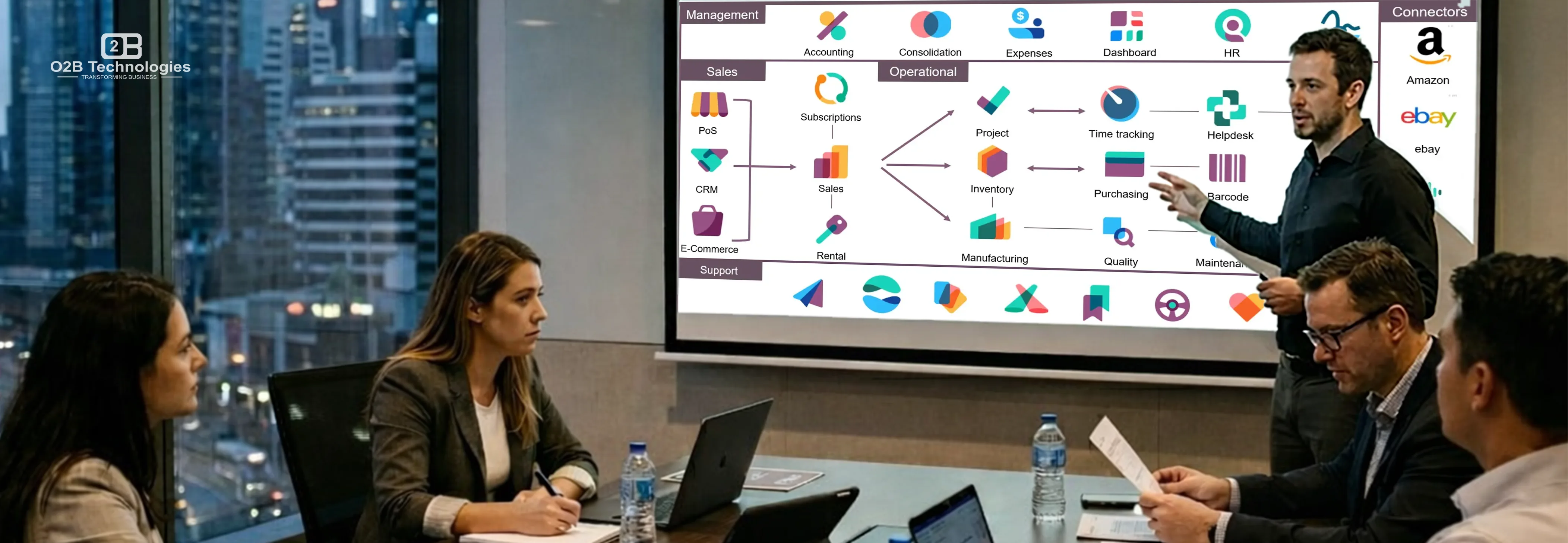
The temptation of a cheap quote
The ERP project feels expensive upfront. Between licenses, consulting, data migrations, and training, the numbers can also seem overwhelming.
So when a vendor offers a dramatically lower quote, it also feels like a win.
ERP success is about sustainable value, not just the lowest cost. Compare what each quote covers and how the work will be delivered.
Looking for Odoo Implementation, Customization, Integration, or Support Services?
1. No proper discovery phase
One of the biggest Odoo implementation failure reasons is skipping discovery.
Discovery is where consultants:
- Analyze your current workflows
- Identify gaps
- Document requirements
- Clarify expectations
- Define scope
Some proposals leave discovery out or limit it to a brief review. Check whether the quote includes workflow analysis, documented requirements, and agreed scope.
Without any structured discovery:
- Requirements are misunderstood
- Scope becomes unclear
- Customizations explode mid-projects
- The budget spirals out of control
An investment that looked right-sized at the start can grow quickly when requirements and scope are not documented.
Use our 12 questions to ask an Odoo partner to evaluate discovery and scope before signing.
2. Underqualified consultants
Look beyond the hourly rate and ask who will do the work, what experience they bring, and how much time they are assigned. Check that the proposal names:
- The project lead and functional consultants
- The technical team and their relevant experience
- Each person's expected availability
- Who is responsible for project supervision
Choose a team whose experience and availability match the work, regardless of where team members are based.
This is one of the most overlooked low-cost ERP implementation risks: the talent gap.
An experienced consultant may cost more per hour, but they:
- Reduce rework
- Avoid unnecessary customization
- Anticipate risks early
- Design scalable processes
That's where the true balance of ERP cost vs. quality becomes very clear.
3. Excessive customizations to also fit the budget
Customization can become the default when a proposal does not explain what standard Odoo can handle and what truly needs custom work.
Ask the team to explain the trade-offs before committing to custom functionality. Read more about standard Odoo vs. customization.
Excessive customization leads to:
- Upgrade complications
- Performance instability
- Dependency on specific developers
- Long-term maintenance costs
What begins as a cheap Odoo implementation can result in higher lifetime expenses due to technical debt.
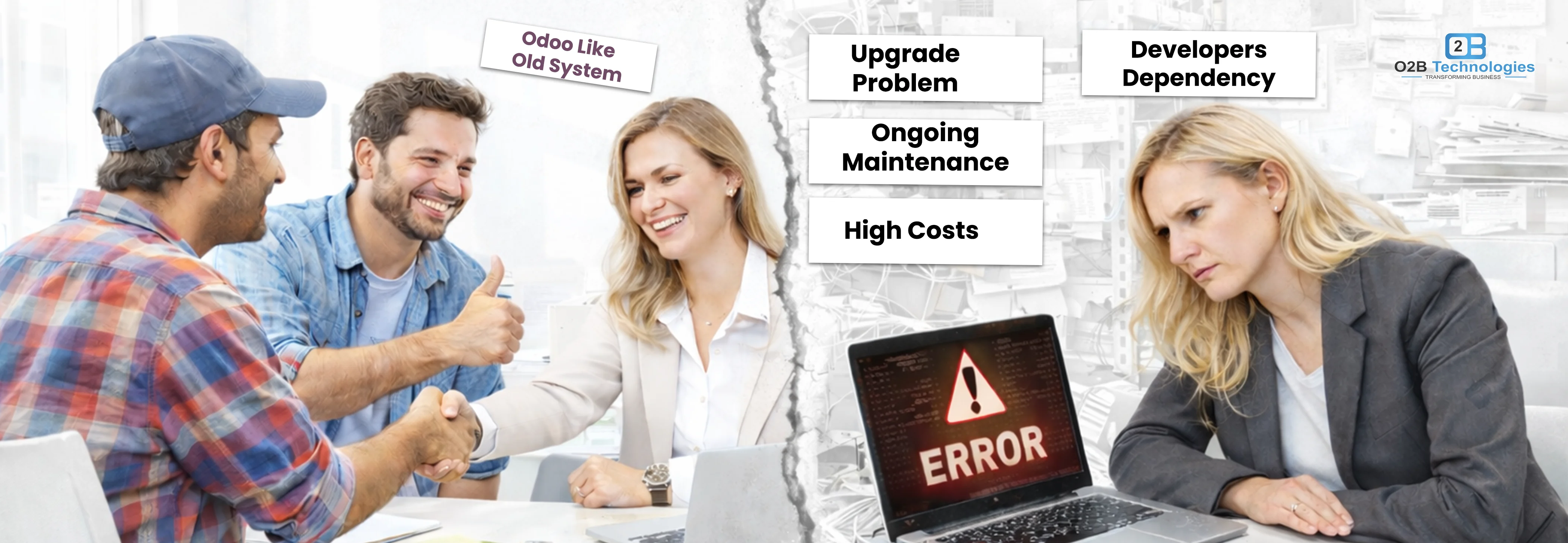
4. Hidden Costs That Appear Later
The initial proposal may look simple. But many hidden costs in Odoo implementation don’t show up until mid-project.
Common hidden costs include:
- Change requests
- Additional integrations
- Extra data migration effort
- Post-go-live fixes
- Training sessions are not included in the scope
- Support packages
When the scope is poorly defined, new requirements may need a change request. Assuming the initial quote covers everything is a common Odoo project budget mistake.
Compare quotes for included and excluded work, change-request pricing, and support terms. See our guide to how much Odoo costs.
5. Weak Project Management
ERP projects are complex. They involve finance, sales, operations, inventory, HR, and leadership alignment.
Without strong project management:
- Deadlines slip
- Stakeholders disengage
- Communication breaks down
- Internal teams lose confidence
Check that the quote assigns a project lead, defines decision-making responsibilities, and includes regular status reviews.
This creates cascading Odoo ERP implementation problems, where small misunderstandings become expensive corrections.
Good project governance isn’t optional—it's critical.
6. Poor Data Migration Planning
Data migration is one of the most sensitive parts of ERP implementation.
A proposal that does not clearly include migration planning may leave these activities out:
- Migrate everything without cleaning
- Skip validation testing
- Limit trial migrations
- Leave data responsibility unclear.
Migration planning should cover data cleanup, test imports, validation, and clear ownership. Review common Odoo data migration mistakes when comparing proposals.
The result?
- Inaccurate inventory
- Incorrect financial balances
- Broken reporting
- Operational chaos after go-live
This becomes one of the most painful Odoo implementation failure reasons, and it can be expensive to fix after the fact.
7. Minimal Training and Change Management
ERP failure is rarely technical—it's human.
When training is cut to reduce costs:
- Users resist the system
- Workarounds reappear
- Spreadsheets return
- Productivity drops
Check whether the proposal includes:
- Role-based training
- Hands-on workshops
- Documentation
- Adoption support
Without proper enablement, even a technically correct implementation can fail.
Without proper enablement, even a technically correct implementation can fail. Training and adoption should be part of the delivery plan.
8. No Long-Term Scalability Planning
ERP systems are not short-term tools. They shape operations for years.
Budget-focused implementations often ignore:
- Future growth
- Multi-company expansion
- Advanced reporting needs
- Automation scalability
- Version upgrade strategy
What works for today may break tomorrow.
This short-term thinking is one of the most dangerous ERP implementation risks because rebuilding an ERP foundation later is far more expensive than building it properly from the start.
9. Unrealistic Timelines
If a proposal promises full implementation in a fraction of the time expected for its scope, ask how the team plans to meet that timeline.
Rushed projects:
- Skip testing cycles
- Compress training
- Reduce documentation
- Ignore integration complexities
This creates unstable go-lives—a classic example of Odoo ERP implementation problems driven by unrealistic expectations.
Speed without structure increases the risk of missed requirements and rework. Compare the proposed schedule with this Odoo implementation timeline.
The Real Cost of Cheap
When you calculate total impact, a failed ERP project includes:
- Lost productivity
- Operational disruption
- Employee frustration
- Leadership trust damage
- Re-implementation costs
- Consultant replacement fees
Suddenly, the expected savings from a cheap Odoo implementation can disappear.
Some businesses hire a second partner to diagnose and repair issues left by an earlier implementation, adding time and cost.
Compare quotes the right way
Use this checklist to compare any Odoo implementation proposal:
- Does the quote include discovery?
- Does it list data migration, training, and go-live support?
- Does it name the people who will work on the project?
- Does it say how change requests are priced?
- Does it include support after go-live, and for how long?
- Does the timeline match the scope?
If a quote is missing any of these, ask why. That's where the extra costs usually appear later.
How to Avoid These Budget Mistakes
To avoid common Odoo project budget mistakes, focus on:
- Detailed discovery before pricing
- Transparent scope documentation
- Senior consultant involvement
- Clear customization philosophy
- Defined change request process
- Structured testing cycles
- Comprehensive training plan
- Post-go-live support strategy
When evaluating proposals, don’t just compare totals—compare methodology.
That’s how you assess true ERP cost vs. quality.
Our verdict
A low quote isn't the problem. A quote that skips discovery, migration, training or support is. Compare what each quote includes, not just the price, and pick the partner whose plan matches your scope. Paying a little more for a complete plan usually costs less than fixing a rushed project later.
Got an Odoo quote you're unsure about?
Send it to us. We'll tell you what's included, what's missing, and what to ask before you sign.
Frequently asked questions
What should an Odoo implementation quote include?
It should clearly define discovery, scope, named project team, data migration, training, testing, go-live support, change-request pricing, post-launch support, and timeline.
Why do Odoo projects go over budget?
Common causes include unclear requirements, incomplete migration planning, unpriced changes, additional integrations, compressed testing, and support or training excluded from the original scope.
Can I fix a failed Odoo implementation?
Often, yes. Start with an independent review of the configuration, customizations, data quality, integrations, and user workflows, then prioritize a recovery plan around business-critical issues.