Your business stock errors can cost you money. A missed reorder alert, or even a wrong item sent to a customer, or even the expired raw material in the storage—all of these things can also hurt a business. That's where ERP inventory management makes a difference.
It also helps SMBs in India keep stock under control, avoid costly mistakes, and plan better. The systems connect purchases, warehouses, sales, and even all kinds of production, all in one place. This helps to avoid the need to even update multiple spreadsheets or even guess what's in stock.
With the right ERP inventory management software, you can easily run lean, reduce waste, and even help a small team grow faster.
Looking for Odoo Implementation, Customization, Integration, or Support Services?
What is ERP inventory management?
ERP inventory management means using the ERP software to easily handle everything related to stock. For example, you can easily keep track of items or plans for what to buy next. It gives one kind of view of all the inventory data across locations. It helps to avoid confusion, mistakes, and extra costs.
The older traditional inventory systems also often work alone. But ERP inventory management helps the software connect inventory with all sales, purchasing, production, invoicing, reporting, etc. It helps to update stock levels automatically when a purchase is received, when a product is sold, or when the raw materials are also used. This also saves time and reduces errors from all the manual work.
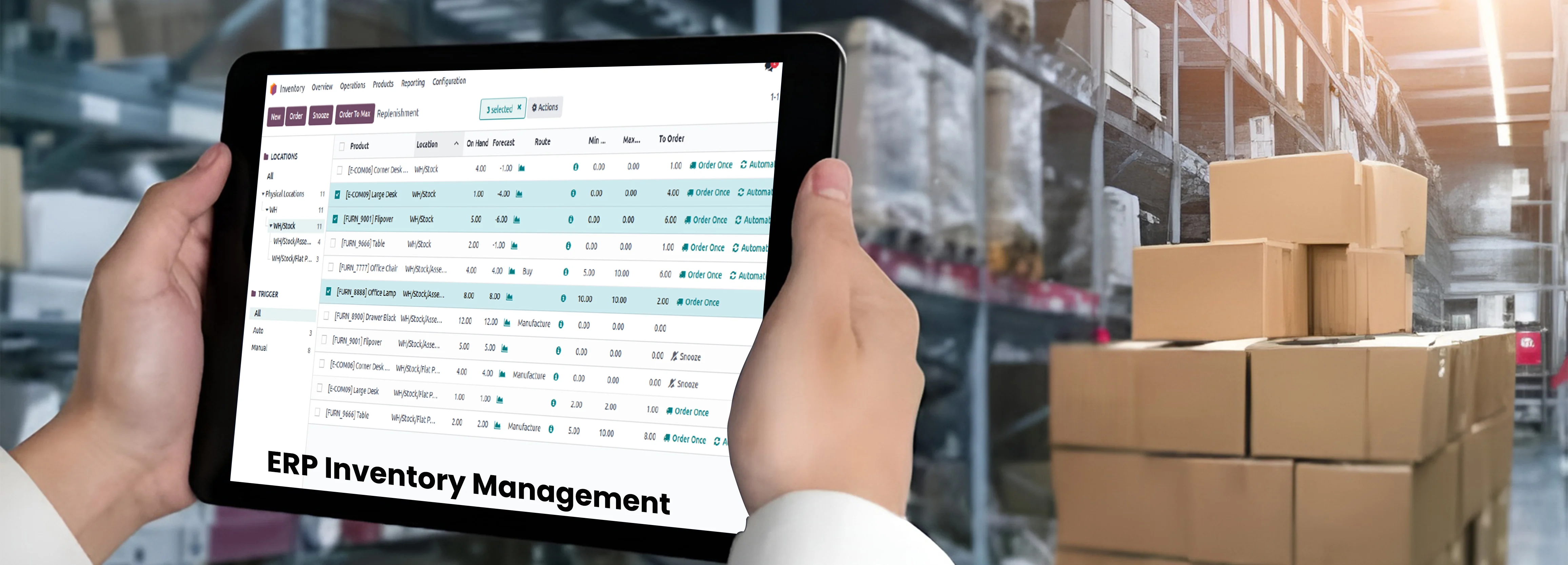
Inventory Modules inside ERP
The ERP inventory module is one part of the ERP system. It also helps to record all item movements—incoming, outgoing, and transfers. The modules also help to set reorder levels, manage safety stocks, and generate real-time inventory reports. For all the Indian businesses, some of the ERP systems also support local units of measurement and all the tax rules.
What makes ERP different is that the inventory modules talk to other modules. For example:
- When a sales order is created, the inventory is reserved for the order.
- When a purchase order is received, the stock is updated.
- When production starts, raw materials are deducted from stock.
- These connections also lead to less manual work and fewer errors.

Inventory vs Material Management
ERP in materials management also goes deeper than just basic inventory control. It also helps to track raw materials, components, and finished goods. It helps to manage storage, wastage, shelf life, and its quality.
This is very useful for all the manufacturers who need to handle materials at very different production stages. While inventory focuses on stock quantity, material management focuses on the full cycle from all the purchases to use to the finished product.
Some of the key functions of ERP inventory modules
An ERP inventory module helps to manage stock in a smart and organized way. It helps to connect inventory records with purchase, sales, and production data. Below are its main features that also support daily operations.
Stock tracking
ERP for inventory management tracks every kind of item from the moment it enters your business to when it leaves. It also shows where the stock is stored, how much is available, and when it was moved. This reduces theft, losses, and stock mismatching.
Real-time updates
The stock levels change all the time. The real-time tracking also ensures that any kind of sale, return, or even purchase updates the system immediately. This also means your team always sees the correct kind of data without even waiting for manual reports.
Material planning
For all the manufacturers, ERP in material management helps to plan how many raw materials are needed. It checks what is in stock and helps to calculate what needs to be ordered for all the productions. This also avoids delays and keeps the workflow smooth.
Reorder alerts
You can easily set minimum stock levels for each kind of item. Once inventory drops below that point, the system sends an alert. This also helps to avoid stockouts and ensures that popular items are always available for all sales or even production.
Batch and serial tracking
Some of the products need a batch number or even serial numbers. An ERP inventory management system can track these for quality control and warranty claims. You'll know when each batch was made or even where each faulty product comes from.
Inventory Valuation Methods
The inventory value affects profits and taxes. Our ERP systems support methods like FIFO, LIFO, and weighted average. This helps to calculate the cost of goods sold and prepare accurate reports.
Reports and analytics
ERP systems generate detailed reports and analytics on inventory levels, stock movements, and even other key metrics. This helps businesses identify trends, forecast demand, and improve decision-making.
Multi-channel integration
The ERP systems can integrate with various kinds of sales channels, such as e-commerce platforms and retail stores, providing a centralized view of inventory and even sales data.
Benefits of ERP for inventory and material management
Using ERP for inventory management helps businesses get more control over their stock and materials. Let's explore the main advantages of ERP inventory management.
Centralized data
The ERP inventory management software manages all stock and materials; all data is stored in one place. Everyone sees the same numbers—whether you are in a warehouse, an account, or sales. This also reduces miscommunications and speeds up the decision-making.
Protections from stockouts and overstocking
Stockouts can stop production or even delay customer orders. Overstocking ties up money in unused items. An ERP inventory module helps to strike the right balance.
Accurate forecasting
The system uses past data to forecast future needs. You can see what sells well, which items are often returned, and which kind of raw materials are used the most for the services.
Integrations with purchases, sales, and production
ERP inventory management connects inventory with other kinds of key functions. When the sales order is placed, the system checks available stocks.
Want to learn more about ERP Inventory?
Explore more tools that improve stock control and business automation.
Get Started