Many Odoo projects don't fail because of technology. They also fail because people stop using the system in the way it was intended.
Odoo's flexibility is rarely the problem. User adoption is one of the biggest reasons ERP implementations underperform — or quietly collapse after go-live — and adoption problems usually start much earlier, during the Odoo implementation timeline.
Let's break down why this happens and what most companies underestimate.

The hidden cost of poor Odoo user adoption
When the users resist or bypass Odoo, the damage is very subtle but very severe:
- Data becomes unreliable
- Teams revert to spreadsheets and emails
- Management loses real-time visibility
- ROI from ERP investment never materializes.
At this stage, companies often blame the software. In reality, the problem is usually how the system was introduced to the people who have to use it every day — not Odoo itself.
The real reasons Odoo user adoption fails
Odoo is implemented as software, not a business system
Quick fix: map each team's daily tasks before setup.
One of the most common Odoo implementation challenges is treating Odoo as a technical rollout instead of an operational transformation.
Projects focus on
- Module setup
- Integration
- go-live deadlines
But ignore:
- Day-to-day user workflows
- Role-based usage
- Behavioral change
When users don't understand why they should use Odoo, adoption stalls no matter how well it's configured.
Change management is an afterthought
Quick fix: tell people why, early; get a manager to lead it.
ERP implementations change how people work. Yet Odoo change management is often skipped or minimized.
Typical mistakes include:
- No communication about what’s changing
- No explanation of business benefits
- No leadership involvement post go-live
Users feel the system is forced on them, not designed for them. Resistance follows naturally.
Without structured change management, even the best Odoo setup will struggle to gain traction.
Looking for Odoo Implementation, Customization, Integration, or Support Services?
Training focuses on features, not jobs
Quick fix: train by role, using real daily tasks.
Another major contributor to Odoo user adoption issues is ineffective training.
Most Odoo training problems stem from:
- Generic, module-based demos
- One-time training sessions
- No follow-up or reinforcement
Users don't need to know everything Odoo can do. They need to know:
- What to click
- When to click it
- How does it make their job easier
When training doesn't align with real roles and real scenarios, users disengage quickly.
Usability is judged through a legacy lens
Quick fix: show what's faster or easier, not just what's different.
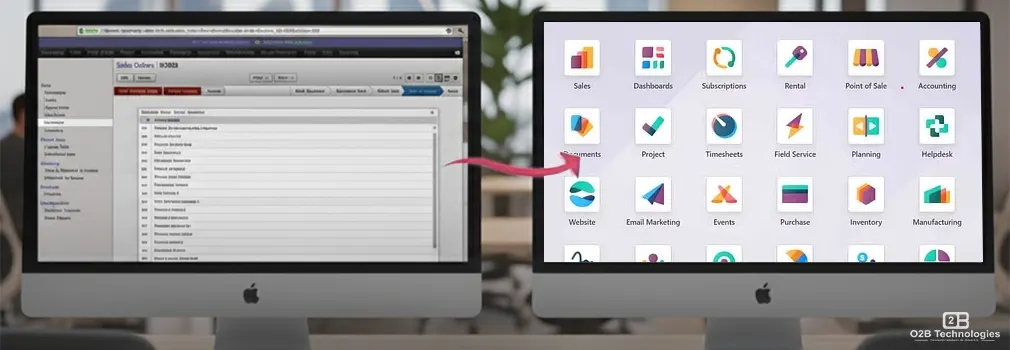
Odoo is process-driven, not transaction-driven like many legacy systems. This shift also impacts Odoo ERP usability in ways users don't expect.
Common reactions:
- It takes more steps than before
- The old system was faster
- Why do I need to fill all these fields?
The issue isn't usability; it's process discipline. Without proper onboarding, users see structure as friction rather than value.
Too much customization
Quick fix: keep one standard way of working; customize only what matters.
Ironically, over-customization often worsens Odoo ERP user adoption.
When companies:
- Customize screens differently for each team
- Override standard workflows
- Add shortcuts without governance.
They create inconsistency and confusion. Users struggle to understand what's standard and what's custom, making support and learning harder over time — this is the core of the standard Odoo vs customization trade-off.
Support stops too soon
Quick fix: keep support and a go-to person for at least 90 days.
Many organizations assume adoption ends at go-live. It doesn't. After launch, users face:
- Real-world exceptions
- Edge cases
- Time pressures
When support fades too quickly, users develop workarounds, and those habits stick — most teams need structured help through the first 90 days after go-live.
Sustainable adoption requires:
- Ongoing coaching
- Usage monitoring
- Continuous improvement
At its core, Odoo user adoption issues arise when companies underestimate the human side of ERP.
Odoo succeeds when:
- Business processes are clearly defined
- Users are involved early
- Training is practical and role-based
- Change is managed intentionally
- Leadership actively uses the system
How to tell adoption is working:
- People stop using the old spreadsheets
- Fewer "how do I…" questions reach your team
- Reports from Odoo are trusted and used in meetings

Our verdict
Odoo adoption fails because of people and process, not the software. Train by role, keep the setup simple, have a leader push it, and keep support going after go-live. Do that, and most teams are comfortable within the first few months.
User adoption isn't a phase.
It's the foundation of every successful Odoo project
Is your team avoiding Odoo?
We'll find where users get stuck and set up role-based training and support to fix it.
Talk to an Odoo ExpertSee our Odoo training and Odoo support services.
FAQs
Why don't employees use Odoo?
Usually not because of the software. Adoption fails when training is generic, the reason for the change is never explained, the setup is over-customized, and support disappears right after go-live. Fixing those four things fixes most adoption problems.
How long does Odoo training take?
Role-based training on real daily tasks usually takes a few short sessions per team rather than one long demo, followed by coaching during the first weeks of actual use.
How do I improve Odoo user adoption?
Explain why the change is happening early, train by role using real tasks, keep the setup close to standard Odoo, have a manager actively lead the rollout, and keep support available for at least 90 days after go-live.