Discrete manufacturing ERP software: the business streamlines your production
In the world of manufacturing, complexity is the basis for business. From even just managing bills of materials to even coordinating production orders, maintaining inventory accuracy, and even ensuring products are easily traceable, every moving part must align with your business. For companies operating in discrete manufacturing, the solution is to adopt a powerful discrete manufacturing ERP software that simplifies operations, which also improves visibility and drives profitability.
In this blog, we will discuss our ultimate guide to understanding discrete manufacturing ERP software, how it works, and why it matters.
What is discrete manufacturing ERP software?
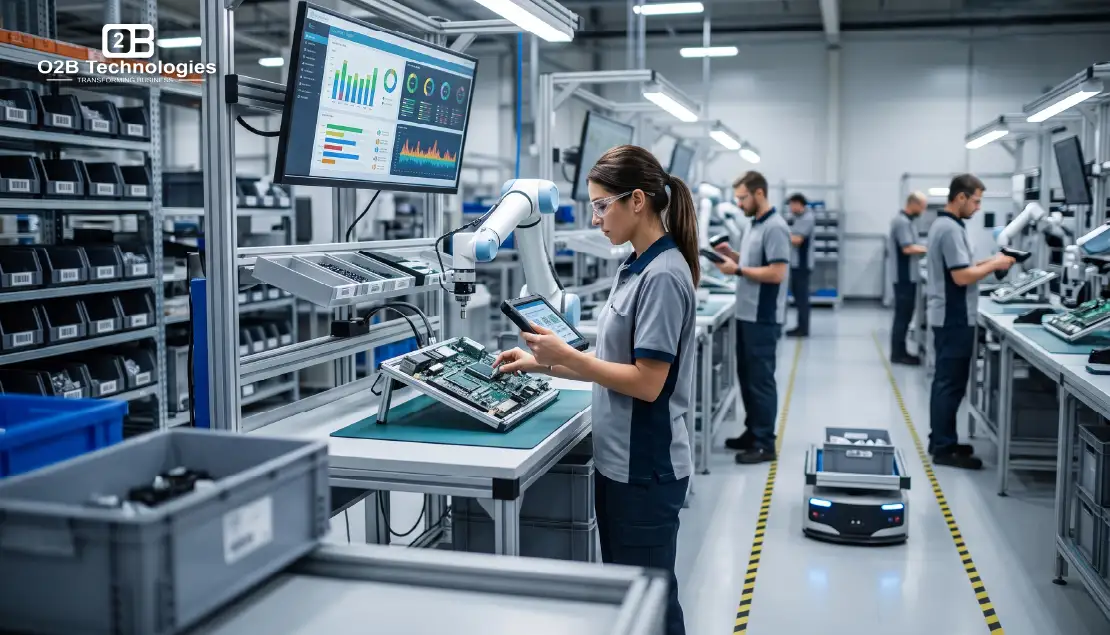
Discrete manufacturing ERP software is a type of enterprise resources planning system software which specifically helps to support businesses that manufacture distinct, countable items like machinery, electronics, tools, and furniture.
Unlike process manufacturing, it also deals with formulas and bulk production. Discrete manufacturing relies on components and assemblies tracked through bills of materials, work orders, and inventory movement. A discrete ERP system helps you and your business in different ways to run peacefully with peace of mind:
If your business builds physical products based on design specs or configurable options, discrete manufacturing ERP software which has its own essential.
Why do discrete manufacturers need a specialized ERP for the business?
Cloud manufacturing is a business strategy that also involves using a cloud-based computing system to operate and manage a manufacturing operation. These computing systems are stored on servers and accessed via the internet, either through a computer or mobile devices, which are often paired with value-added technology such as automations and even machine intelligence.
Assemble to order, engineer to order, make to stock, make to order.
These production methods demand flexible yet structured planning tools that can also handle multiple BOM levels, version control of components, accurate forecasting, dynamic routing and scheduling, serial number and lot tracking to make it run perfectly.
Discrete manufacturing ERP software consolidates all these functionalities into one system, giving teams real-time visibility, control, and operational agility while using it.
What are the key features of discrete manufacturing ERP software?
Discrete manufacturing ERP software is designed to address the unique challenges faced by manufacturers who produce distinct items. Here are some key features to look for:
-
Bill of materials (BOM) management
An essential feature that helps in tracking component relationships, subassemblies, and configurations. You can manage multiple BOM versions, validate materials, and synchronize productions with inventory.
-
Job costing and estimating
Helps in tracking actual vs estimated costs, including labor, overhead, and subcontracting. Key for quoting, profitability analysis, and strategic planning.
-
Production planning and scheduling
Automatically generates production orders based on forecasts or sales orders, allocates work centers, and optimizes shop floor throughput.
-
Real-time inventory management
Maintains control over raw materials, finished goods, and WIP with location-based tracking for better operational clarity.
-
Quality control and compliance
Ensures quality standards with inspection workflows, documentation tracking, and non-conformance management.
-
Manufacturing execution system (MES) integrations
Connects machines, operators, and back-office data in real time to streamline workflows and reduce errors.
-
CRM and field service integrations
Integrates seamlessly with CRM systems and field service modules for end-to-end production lifecycle visibility.
Benefits of discrete manufacturing ERP software
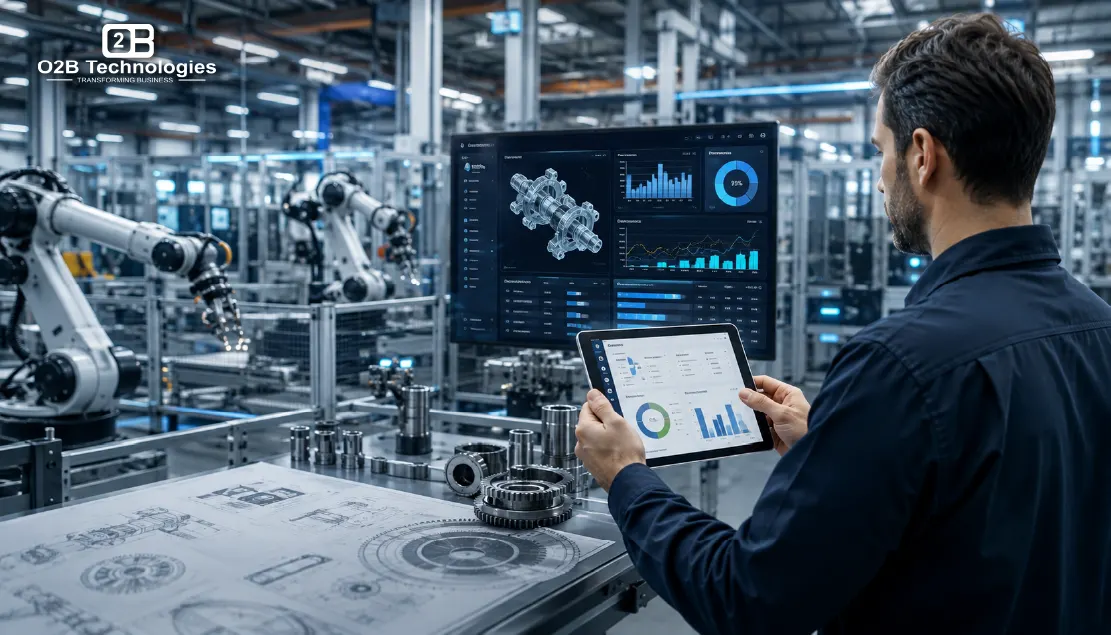
If you're still running your productions using Excel, QuickBooks, or even outdated systems, consider these benefits of switching to a modern discrete ERP system to make your business workflow better and easier to manage:
Streamlined operations
This helps in automating manual tasks, reducing data duplication, and improving coordination across departments.
Better forecasting
It is done to use historical trends and sales data to plan future production inventory levels for businesses.
Improved customer satisfaction
It is achieved by delivering on time and maintaining product consistency with accurate production planning and smooth flow of business.
Cost control
Identify and reduce overhead waste and inefficiencies with real-time job costing.
Growth readiness
It is done to scale your business confidently with a platform that supports multiple locations, currencies, and product lines.
Major differences between discrete ERP software vs generic ERP systems
While some ERP systems claim to serve all industries, only those built for discrete manufacturing environments can truly handle the nuances of complex BOMs, variable production runs, and engineering changes.
Some of the generic ERPs may also lack:
- Manufacturing-specific workflows
- Accurate WIP accounting
- Routing flexibility
- Version-controlled assemblies
- Real-time shop floor integrations
Always choose a discrete manufacturing ERP software to ensure your system also fits your processes, not the other way around, for the users.
When is the right time to implement a discrete ERP system?
If you're experiencing any of the following, it's also time to consider upgrading:
- Inventory differences between the warehouse and the system
- Difficulty forecasting production needs
- Frequent stockouts or overstocking
- Manual job costing errors
- No visibility into manufacturing performances.
Future Trends in Discrete Manufacturing ERP
The ERP landscape is evolving fast. Discover the forward-thinking capabilities transforming modern manufacturing floors.
Cloud-Based ERPs
Leverage platforms like Business Central for ultimate operational flexibility, security, and effortless scalability.
AI-Powered Insights
Utilize advanced machine learning for accurate demand forecasting and proactive shop floor anomaly detection.
IoT & MES Integration
Connect smart machines directly to your core system to track machine performance and live production cycles.
Why choose O2B Technologies for your discrete ERP implementation?
At O2B Technologies, we have 15+ years of experience in helping manufacturers all over the world and optimizing their operations. When it comes to discrete manufacturing ERP software, we offer:
- Deep knowledge of software
- Industry-specific configurations
- Supports for clients
- Proven track record with the services
- Local presences and personalized onboarding.