Enhancing Communication with Twilio Integration in Odoo
Client Challenges
A Mid-sized technology services company with a growing customer base was facing challenges in managing timely and effective communications with the clients. The organizations used Odoo ERP to handle CRM, sales, and helpdesk functions, which also often lacked unified communication channels to enhance customer service, send alerts, and offer real-time support.
The client also sought a solution that helps streamline communications with the clients. The organizations used Odoo ERP to even handle CRM, Sales, and even its helpdesk functions, which also often lacked unified communication channels to engage customers, send alerts, and offer all the real-time support.

Business Challenges
Disconnected Communication Channels
Leads to fragmented customer interactions.
Manual Processes for Alerts
Sending SMS & notifications is time-consuming.
No Communication Tracking in Odoo
Teams lose context & continuity.
Poor Customer Satisfaction
Due to delays and missed follow-ups.
Lack of Automation
Slows down cross-functional performance.
Solution: Twilio integration with Odoo
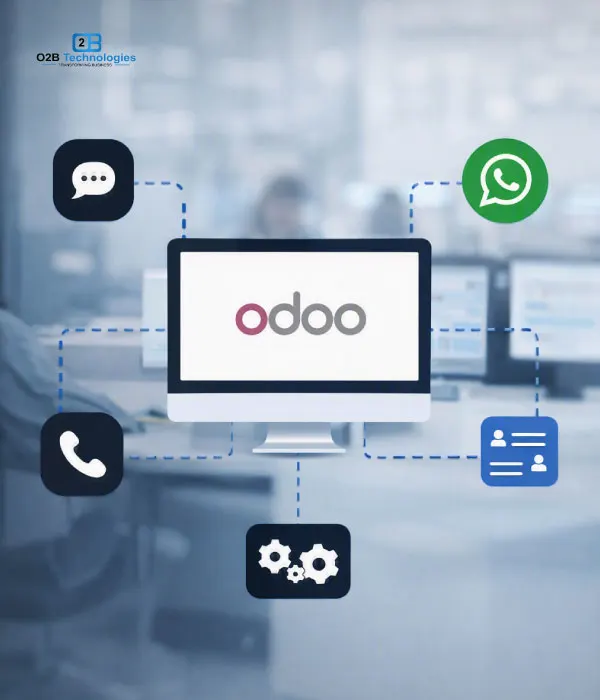
By integrating Twilio's communication platform into Odoo, the clients also achieved seamless interactions across CRM, sales, and even their helpdesk modules. The integration, which is enabled for the following features, is:
SMS messaging:
the automated transactional alerts, appointment reminders, and all the promotions are sent directly to the Odoo systems.
WhatsApp communication:
it is designed with personalized customer messages and even supports follow-ups without leaving the Odoo interface.
Call management:
it is done to make and receive voice calls from within the systems with automated logging and even tracking.
Communications history tracking:
every interaction was recorded and even linked to customer profiles, allowing teams to view past conversations instantly.
Automated workflows:
the integrations with Odoo's workflows ensured that communications were triggered based on all actions, like the lead creation, ticket updates, or even order confirmations.
Things We Implemented (Our Approach)
- Assessment phase: Analyzed the client's current communication processes and its pain points.
- Configuration: To set up Twilio API credentials within Odoo and customized modules like CRM and helpdesk for communication triggers.
- Automation Design: It helps in developing workflows to automate messaging, call alerts, and notifications.
- Training & Support: It is provided. User training sessions are provided to ensure teams can leverage the new features very effectively.
- Testing & Rollout: It is done to run extensive tests to ensure message delivery, call routing, and even its logging work seamlessly before the full deployment.

Results Achieved
Improving customer engagement:
It has resulted in a 40% increase in the response rates due to timely SMS and WhatsApp messages.
Enhancing support efficiency:
It is done to check the helpdesk resolution times for reducing them by 30% with faster communication.
Automation of routine tasks:
The team saved hours per week by also automating the alerts and their follow-ups.
Centralizing communication:
It is done to interact and are tracked within Odoo for also providing a unified customer view.
Scalable infrastructure:
The solutions were also designed to grow with the company, supporting increased communications volume without adding overhead
Key Learnings
Improved Collaboration
Integration inside ERP shifts focus to customer relationships instead of switching platforms.
Automation Boosts Efficiency
Real-time tracking and automation improve service delivery and customer satisfaction.
Tailored for Business Needs
Custom communication workflows ensure the solution fits each organization perfectly.
Conclusion
The Twilio integration with Odoo transformed the way the clients engaged with the customers. By also consolidating messaging, calls, and even alerts into a single system, the organization not only improves operational efficiency but also builds stronger relationships with its customers. This case study highlights how strategic integrations of the communication platforms can unlock new opportunities for growth and even customer satisfaction.