
Wholesale Business ERP System
Wholesale Business ERP system with an e-commerce platform is crucial for a wholesale business aiming to streamline operations, improve efficiency, and enhance customer experience.
Looking for Odoo Implementation, Customization, Integration, or Support Services?
Key Components for wholesale Business ERP processes with e-commerce includes the followings:
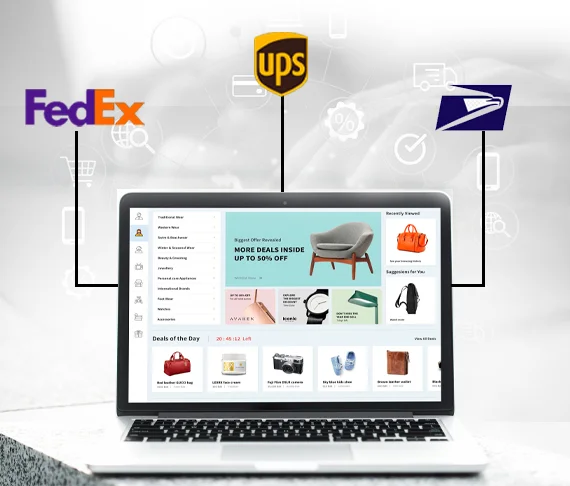
Integrated E-commerce Platform
- 01Price availability for only Approved Customer i.e. Price is hidden for retail users
- 02Quick Order Functionality
- 03Use pre authorize payment method
- 04Ability to pay using predefined credit terms
- 05Workflow for business registration
- 06Payment using Authorize.net and Stripe
- 07Integrated with FedEx, UPS and USPS
- 08Prepare B2B list to place an Order anytime
- 09Ability to change address and add multiple addresses etc.
- 10Track Orders dispatch status
- 11Ability to view/order only the available quantity
- 12Filter using category, prices from low to high and vice versa
Sales Order Management
- 01 Online Order Processing: Sales orders from the e-commerce platform are automatically imported into the ERP system for processing.
- 01 Manual Processing: The back-end team can also process orders manually to meet their business requirements.
- 01 Real-Time Inventory Updates: The ERP system updates inventory levels in real-time based on online and offline sales created in the system.


360-Degree Purchase Optimization
- 01 The ability to efficiently process orders on time is the winning point for any distributor.
- 02 ERP software should be able to make collaboration and communication with vendors easily through data sharing, recording transactions, and requirements gathering.
- 03 ERP offers a comprehensive view of every purchase-sales information, which helps you know the strength and weakness of your business as well as forecast and re-order items in timely manner to streamline your business functions.
Customer Relationship Management (CRM)
- 01 Unified Customer Profiles: CRM tools within the ERP system should consolidate customer information from both online and offline channels, providing a comprehensive view.
- 02 Order History Access to customer order history helps in providing personalized service and targeted marketing.


Inventory Management
- 01 Multi-Channel Inventory Control: Manage inventory across various sales channels, ensuring accurate tracking of stock levels, inventory adjustments and preventing dead stock generation.
- 02 Demand Forecasting: Leverage historical e-commerce data to improve demand forecasting and optimize stock levels.
Order Fulfillment
- 01 Warehouse Integration: Integrate the ERP system with the warehouse management system to optimize order fulfillment and stocking process with precision.
- 02 Pick-Pack-Ship Automation: Streamline the pick, pack, and ship processes by automating tasks within the ERP system.

Shipping and Logistics
- 01 Carrier Integration: Connect the ERP system with frequently used shipping carriers like (FedEx, UPS, USPS, DHL etc.) for real-time rate calculation, label generation, and tracking information.
- 02 Order Tracking: Provide customers with real-time order tracking information through the e-commerce platform. An ERP software with well-defined logistics management offers the best solution by enhancing visibility across the shipments, orders, and inventories and thus enables you to work quickly to control the costs around these major operations.
Invoicing and Accounts Receivable
- 01 Automated Invoicing: Generate and send invoices automatically from the ERP system based on e-commerce transactions.
- 02 Payment Integration: Integrate payment gateways to facilitate seamless online payments like (authorize.net, stripe) and update payment status in the ERP system.


Analytics and Reporting
- 01 Unified Analytics: Consolidate data from e-commerce and ERP systems for comprehensive business analytics.
- 02 Sales Performance Metrics: Analyze sales performance across different channels and product categories.
Customer Support
- 01 Integrated Customer Support: CRM within the ERP system should capture and manage customer inquiries and issues from various channels, including the e-commerce platform.
- 02 Ticketing System Integration: Integrate a ticketing system to efficiently handle customer support requests.

Data Security and Compliance
- 01 Secure Data Transmission: Ensure secure communication between the ERP system and the e-commerce platform to protect sensitive customer and business data.
- 02 Compliance Checks: Implement features to comply with data protection regulations and industry standards.
Scalability and Future Expansion
- 01 Scalable Architecture: Choose an ERP system and e-commerce platform that can scale as the business grows.
- 02 APIs and Integrations: Select platforms that support a wide range of APIs and integrations for future expansion and adaptation to new technologies.

Integrating ERP with e-commerce provides a unified platform for managing wholesale business processes, offering a seamless experience for customers and improving overall operational efficiency. It's essential to choose systems that are flexible, easily customizable, and capable of meeting the specific needs of the wholesale business.