Fast-moving consumer goods (FMCG) are everyday products that typically sell quickly and may have limited shelf lives. FMCG companies need to coordinate procurement, production, inventory, sales channels and distribution while keeping product batches, expiry dates and demand changes visible across their operations.
What is ERP?
Enterprise Resource Planning (ERP) connects key business processes such as purchasing, inventory, sales, finance and reporting. For FMCG companies, the right setup should also support batch traceability, shelf-life control, fast order processing and distribution across multiple channels.
What FMCG Companies Need from an ERP
Related guides: Retail and distribution, Manufacturing, Inventory management and ERP for food and beverage.
- Lot and batch tracking with expiry-date management and first-expired-first-out (FEFO) workflows where appropriate.
- Fast order processing for wholesale, distributor, retailer and direct-to-consumer orders.
- Multi-warehouse inventory visibility, replenishment and stock transfers.
- Trade promotions, customer-specific pricing and discount management.
- Retailer, marketplace and eCommerce channel coordination.
- Demand planning based on sales history, seasonality and current stock.
- Recall support through traceability of affected batches, suppliers and customers.
ERP Vendors Compared for FMCG Companies
| ERP | Best for |
|---|---|
| Odoo | Small and mid-size consumer brands wanting inventory, lots, sales, eCommerce and accounting in one system. |
| SAP | Large, global consumer goods groups with complex operations. |
| Oracle NetSuite | Growing brands with several entities. |
| Microsoft Dynamics 365 | Brands already using the Microsoft stack. |
| Infor CloudSuite | Large food and consumer goods manufacturers. |
Real example: automatic purchase orders
A growing e-commerce brand was creating purchase orders manually as online orders increased. O2B connected the e-commerce platform with Odoo so orders could trigger the appropriate purchase orders automatically, reducing repetitive entry and helping speed up procurement.
Here, we compare five ERP software solutions for FMCG (Fast-Moving Consumer Goods) companies.
Odoo
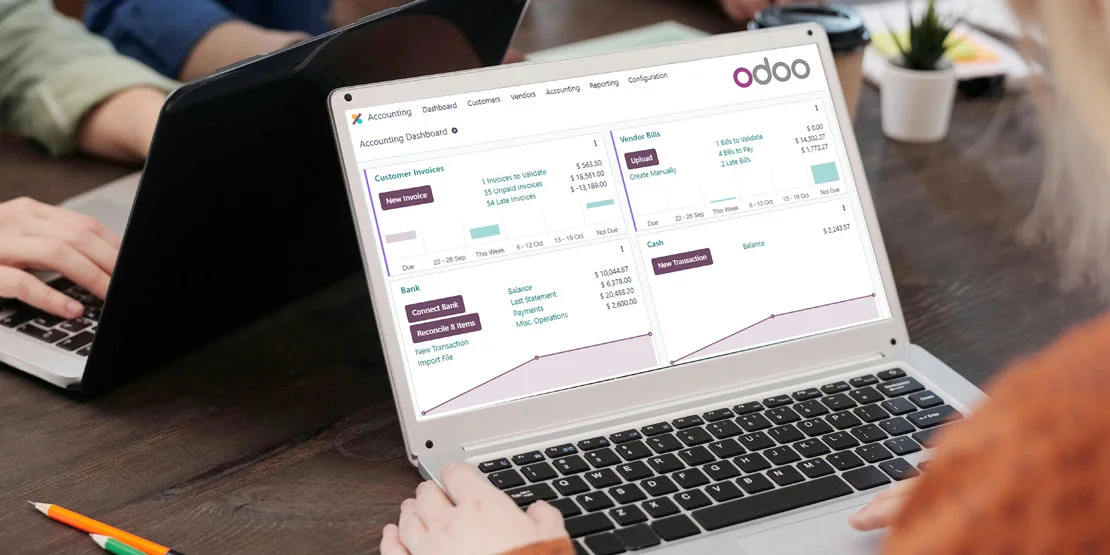
Odoo is an open-source ERP solution software that makes the first position in the list due to its flexibility and modularity, which is ideal for any FMCG companies. The software helps businesses connect workflows across sales, inventory, purchasing, accounting and eCommerce. Odoo gives a wide range of functions, and the final setup should be selected according to each company’s processes and requirements.
Key Features
Odoo Integration Service: Odoo integration goes hand-in-hand with other modules within its system, allowing them a seamless flow of data among different business functions. which enhances the efficiency for the business operations.
Odoo Customization: Odoo is an open-source enterprise planning solution which helps business to manage their workflow in different aspects like sales, productivity, marketing, finance, studio and many more. Besides a huge number of services to offer there are still afew business firms that feel the need to customize the software to get a more personalized user interface.
Odoo versions: Odoo gives two types of version for their users, The first one being the community version which is free and can be used for small scale business, the second one is called Odoo Enterprise version which must be purchased with a subscription fee that may vary on the number of users and additional customized features.
Odoo is an ERP platform whose inventory, sales, purchase, eCommerce and accounting apps can be configured around a consumer goods company’s workflows.
SAP
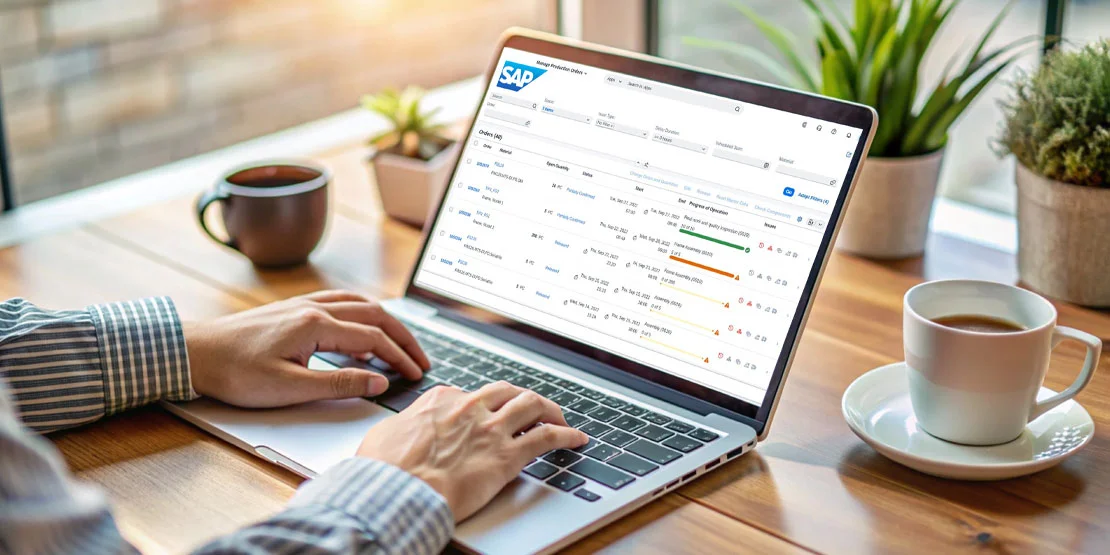
SAP is a complete solution for any business reaching for the ERP system to manage their large enterprise. SAP includes capabilities for integrating business functions and managing supply chains. Large consumer goods groups should assess its fit for batch traceability, demand planning, trade promotions and multi-country distribution against their requirements.
Key Features
Provides Integrated Processing Unit: SAP provides a complete integration process to its users which gives them the liberty to run multiple functions at a time.
Real-Time Output: SAP is built with the in-memory database that allows real-time analytics, which enables the firm to resonate quickly to support timely analysis and reduce manual processing errors.
Tailored Solutions: SAP provides customized modules especially for FMCG sector, it includes planning and production scheduling, to enhance operational efficiency for the forthcoming growth.
Oracle NetSuite
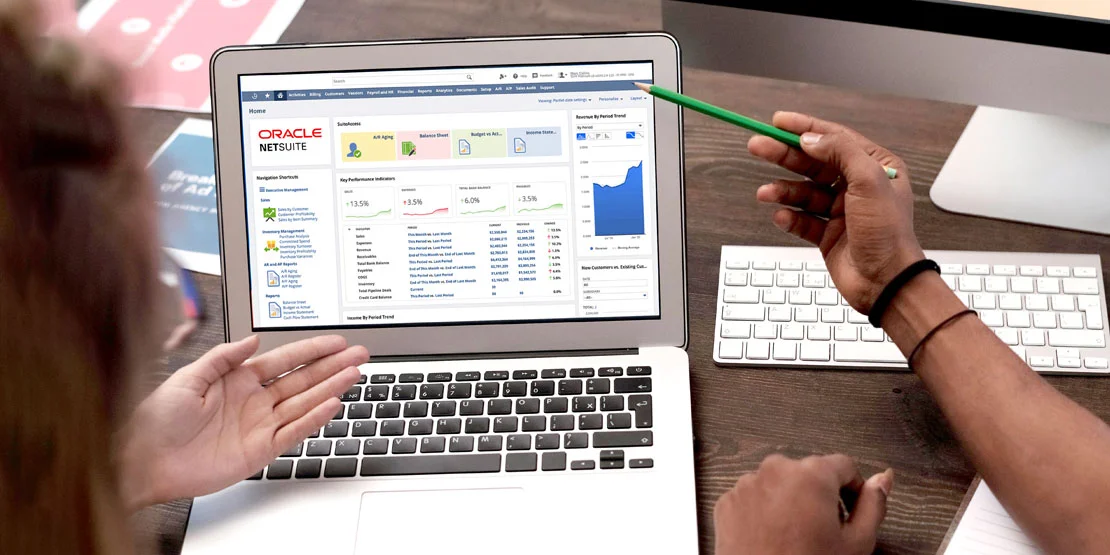
Oracle NetSuite is the ERP solution available on the cloud which gives the user a wide range of managing options to choose from according to their targeted customers and need, Oracle NetSuite ERP solution works on purposes like scalability and flexibility which can make it an ideal choice for FMCG industries. Growing brands should evaluate its support for multi-entity inventory, channel orders, replenishment and reporting.
Key Features
Merged Business Management: NetSuite works seamlessly with the modules like financials, CRM, e-commerce, and inventory management all together in a single platform which is another beneficial point for the business to scale up.
Easy to understand Dashboards: with the help Oracle NetSuite Users can create customized dashboards for an easy understanding and relevant processing.
Global Reach: Oracle NetSuite works with multi-currency and multi-language options, which makes it ideal for users across the globe.
Oracle NetSuite's is cloud-based software which allows an easy updates and security assurance for FMCG businesses.
Microsoft Dynamics 365
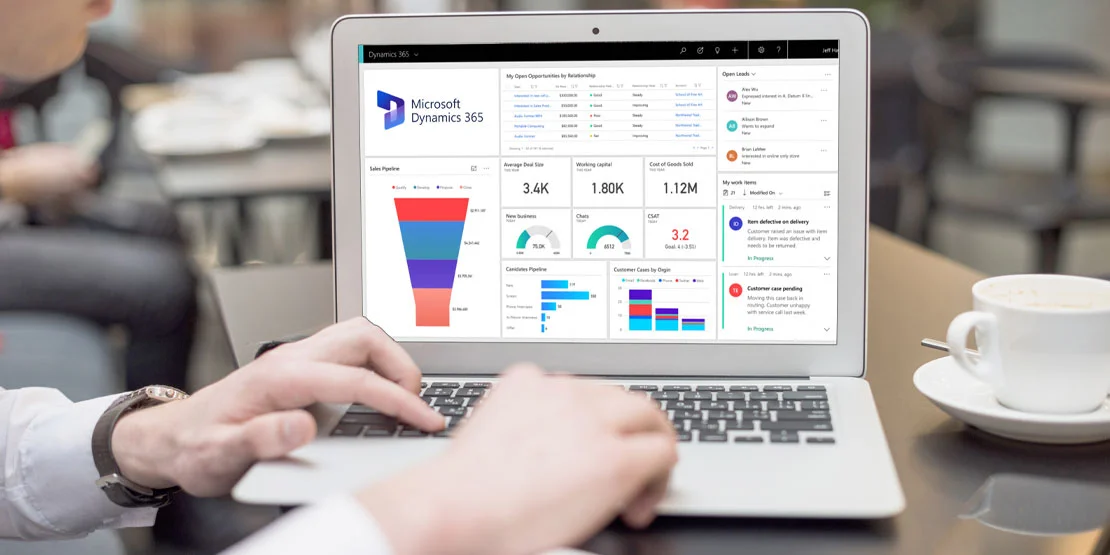
Microsoft Dynamics 365 is a powerful software that combines ERP (Enterprise Resource Planning) and CRM capabilities, that provides a 360-degree suite for FMCG industry. It also provides integration with other Microsoft product enhances serviceability and collaboration and helps in scalability. FMCG teams should review the relevant Dynamics 365 applications for inventory, demand planning, order management and distribution workflows.
Key Features
Versatile Operation Options: Microsoft Dynamics 365 can be installed in both ways such as primarily as a cloud-based suite, with deployment options depending on the specific Dynamics 365 application, which provides business an option to work with.
Artificial intelligence and Machine Learning: Microsoft Dynamics 365 works with AI capabilities that help organization predict consumer performance and stock inventory.
Comprehensive Reporting: the Advanced reporting tools present in the software enable businesses to examine upcoming sales trends and customer preferences.
It is especially ideal for the business who are already a big name in the FMCG sector and are looking to improve their customer interactivity and interface as their priority
Infor CloudSuite
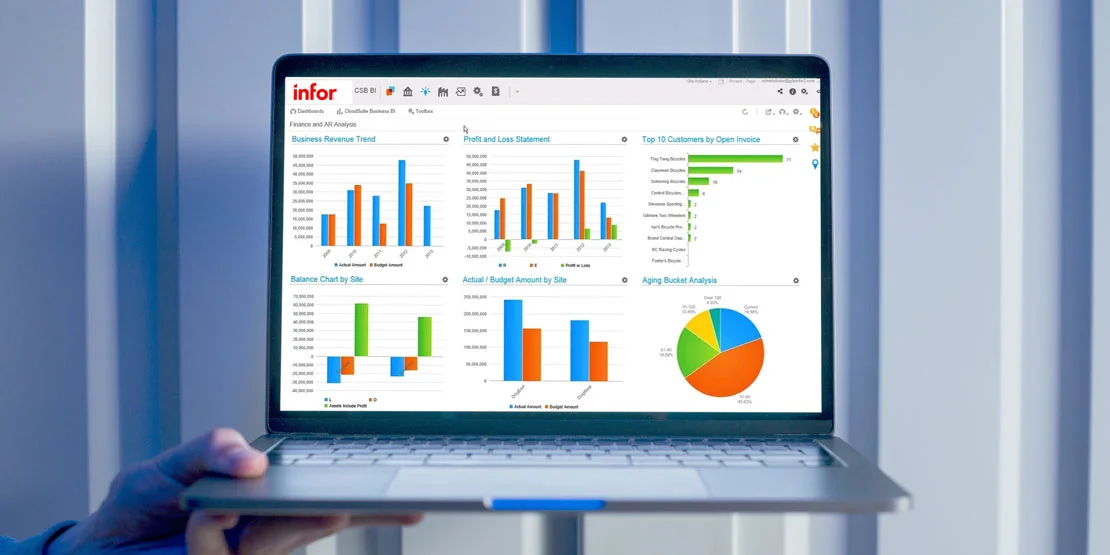
Infor Cloud Suite is designed specifically for industries like FMCG, as it offers industry-oriented capabilities; its fit should be assessed for batch and expiry traceability, production planning, distribution and supply-chain workflows.
Key Features
Functionality based on your industry: Infor Cloud Suite provides a variety of managing tools like inventory, and supply chain operations, Invoice, real-time operations tailored to FMCG needs.
Alliance: Integrated features in the Infor Cloud Suite increase communication across departments, which builds overall efficiency.
Advanced Analytics: Infor's analytics tools are much more progressive in nature, which helps the businesses to gain insights into operational performance and customer behavior.
The Infor Cloud Suite’s focus on industry-specific solutions means it can be an asset for FMCG companies looking to optimize their operations and increase the workflow.
Challenges faced by FMCG ERP Software
Lack of pre-Planning
The user must go through a thorough study and planning before implementation of any ERP software as it can lead to various issues such as There can be times when the FMCG companies may fail to define clear objectives, which further results in a misalignment between the ERP system and business needs. lack of pre-Planning can also lead to an insufficient understanding of the used and required resources in the process of successful implementation, it also may cause delay and other difficulties down the line.
Data Integration Challenges
As FMCG companies are one of the leading sector which is growing everyday it is obvious that it will generate vast amounts of data from multiple sources, including sales, inventory, procurement, and production. Integrating this data into a single ERP system can be a difficult task to manage due to unpredictable data formats, quality issues, and the importance of maintaining the map from original system These Data Integration challenges can delay the effectiveness of the ERP system and lead to errors in the process like reporting and decision-making.
Challenges to modify the existing ones
It is a high chance that Implementing the new modules can lead to significant changes in business processes and workflows. As a skilled developer there many be times when they avoid such confusion for future Implementing but if there are users who choose to not go with such developers there is a high chance that it leads to low adoption rate and underutilization of the ERP system.
Customization issues
The FMCG companies are a vast sector to tackle due to their unique needs with many vary from business to business to regulate the processing and maintain the business standard. While customization is a powerful tool to meet the vision it also can be a difficult task if not done the right way as too much customization can complicate the implementation process and the data structure, it also increases the additional costs, and extend timelines.
Scalability and Flexibility Issues
The dynamic nature of the FMCG industry requires ERP systems scalable and flexible with the business. To tackle this problem the Companies, need to align themselves with the current market changes, launch a new product line which targets different set of customers and monitor the growth. If the ERP system lacks these capabilities, it can lead to limiting the company's responsiveness to evolving business needs and market demands.
Our Verdict
For small and mid-size US consumer brands, Odoo can bring lot tracking, expiry control, inventory, online and wholesale orders, and accounting into one system when configured for the business’s processes. Global consumer goods groups with complex international operations usually also evaluate SAP or Infor. Compare vendors against traceability, demand planning, trade promotions, distribution requirements and the systems you already use.
Running a consumer goods brand?
See how Odoo would track your lots, stock and orders across every channel.
Talk to an Odoo ExpertFAQs
What is ERP in FMCG?
ERP software for FMCG industry is mostly used to track the regular workflow in the organization and also manage the overall level of the inventory and stocks that make the business standout in the market and also boost the productivity.
Which ERP is best for FMCG companies?
O2B Technologies is an Odoo implementation and integration partner, not an ERP product as it helps the user to operate and processes in FMCG industries, while also automating the core functions.
How important is pre- planning during the ERP implementation?
The pre- planning plays a major role hence the lack of pre-Planning can disrupt the overall process of the user, also the user who skip the process of pre-planning, can also have a monetary loss.
Does Odoo provides ERP solution software for FMCG companies?
Odoo provides ERP applications that can be configured for FMCG workflows, including inventory, purchase, sales, eCommerce and accounting. The required setup depends on the company’s operating model and business goals.